Sustainable Alternatives to Glitter on Flowers
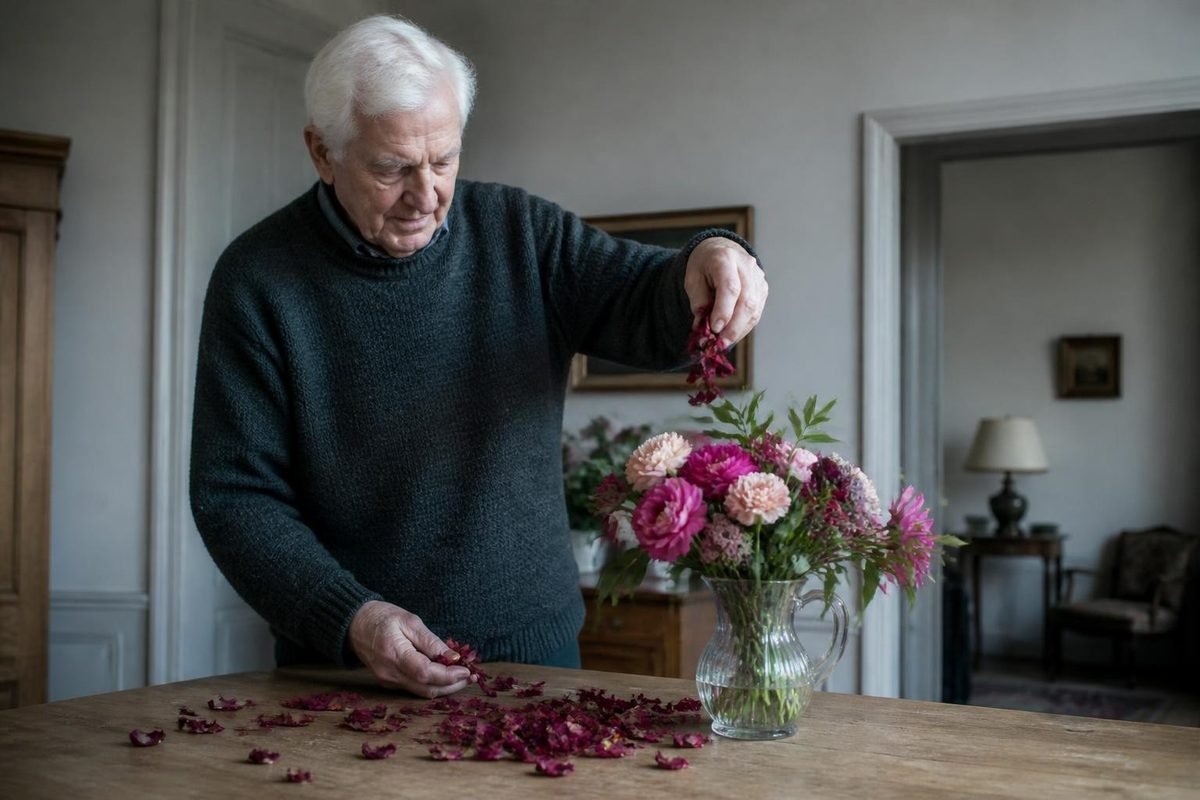
Sustainable alternatives to glitter on floral decorations include dried petals, leaves, herbs and reusable fabric ribbons. These materials can add color and texture without scattering tiny plastic particles, though their environmental impact still depends on how they are sourced and used.
Use petals and leaves for color
Small dried petals can bring a soft, scattered look to a table arrangement. Rose petals, for example, can be dried and placed around a vase or tucked between larger flowers. Keep them fairly large rather than crushing them into dust, so they are easier to gather afterward.
Leaves offer a different kind of detail. A few small leaves around the base of a centerpiece can give it depth without competing with the flowers. If you have suitable foliage in your garden, use what you already have and take only what you need.
Fresh petals and leaves will change as they dry. Some curl, darken or become fragile. That slow change can be part of the decoration rather than a flaw to hide.
Choose texture instead of sparkle
Glitter is often used to catch the eye. Texture can do the same job more quietly. Try combining smooth petals with feathery foliage, seed heads or a few stems of dried herbs. The contrast shows up especially well in a simple arrangement with room between the stems.
These ideas work on their own or together:
- Scatter dried petals around the vase, keeping them away from food.
- Tuck a few herb sprigs among the flowers for shape and scent.
- Wind a reusable fabric ribbon around the vase or bouquet stems.
- Place collected leaves beneath a centerpiece as a loose border.
Use fragrant herbs sparingly if the flowers will sit at a dining table. Strong scents can compete with a meal, and some guests may be sensitive to them.
Look closely at glitter alternatives
Products described as biodegradable glitter are not all the same. Check what they are made from and what conditions they need to break down. A claim on the packet does not necessarily mean the material will decompose in a home compost pile or in water.
There is also a practical difference between a loose decoration and one glued to flowers. Adhesives can make it harder to separate materials for reuse or composting. Placing petals around an arrangement, rather than sticking them to it, keeps cleanup simpler.
Plan for cleanup and reuse
After the flowers have been enjoyed, separate ribbons, wire and other nonplant materials from the stems. Save clean ribbon for another bouquet or a wrapped gift. If your local compost service accepts flowers and foliage, check its rules before adding them. Home compost practices vary too.
Keep loose petals and leaves out of drains, where they can contribute to blockages. Gather them from tables and floors instead. If the flowers or foliage have been treated with substances you are unsure about, check local disposal guidance rather than assuming they belong in compost.
A few well chosen details can make flowers feel special without leaving a trail of glitter. The simplest choice may be to let the shapes and colors already in the arrangement do the work.
Worth a look: guide to flower paintings